- Free Consultation: (936) 766-5171 Tap Here To Call Us




Texas Professions and Criminal Records


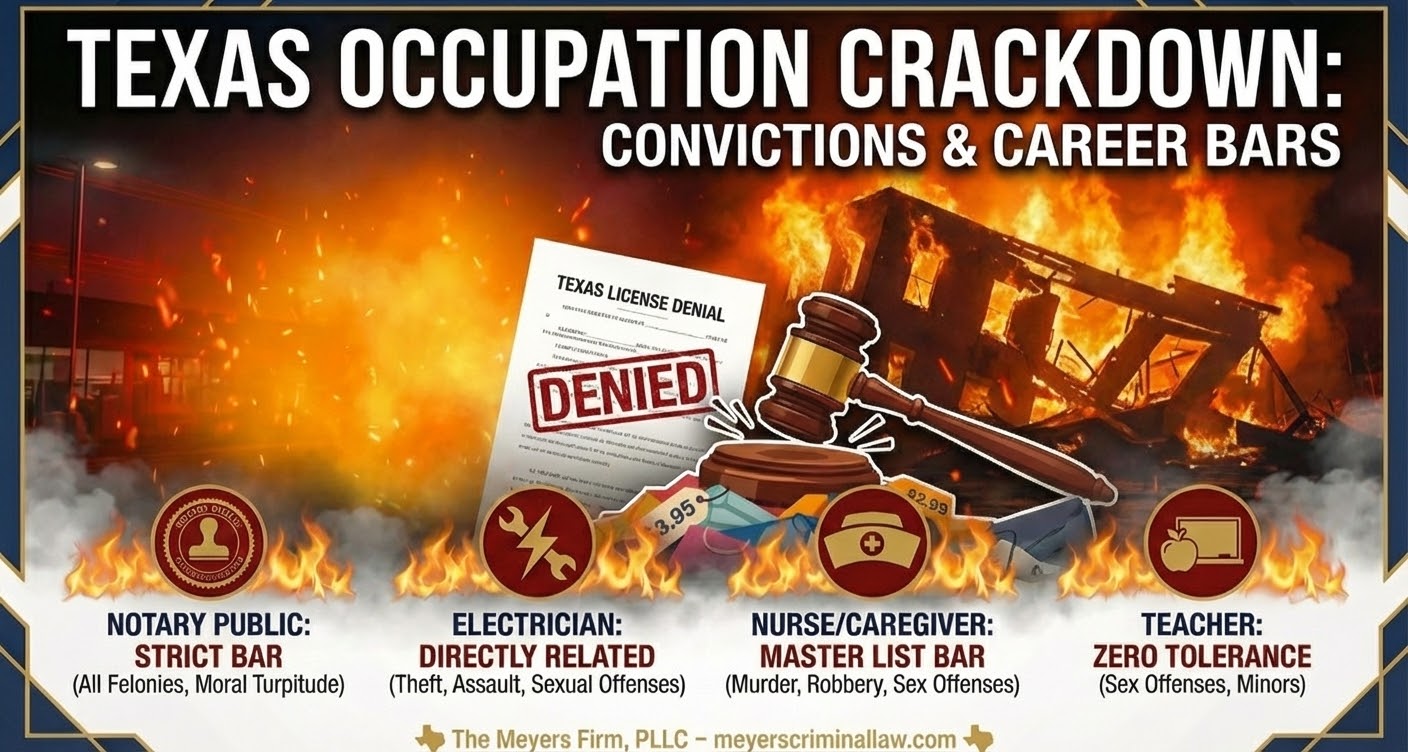
Can You Still Work?
For many workers, the intersection of Texas professions and criminal records acts as an invisible wall. It bars you from holding the state license required to earn a living. At The Meyers Firm, PLLC, clients often say, “But the court dismissed my case after deferred adjudication,” or “It was just a misdemeanor.”
Unfortunately, for many Texas licensing boards, that distinction may not matter. However, Texas law lacks a single master list of barred occupations. Instead, a complex web of statutes and administrative rules governs every profession. Consequently, we have provided a breakdown below explaining how Texas professions and criminal records can prohibit individuals with certain histories from holding popular jobs.
A Critical Warning on Deferred Adjudication
First, understand this general rule before looking at specific jobs: Do not assume that receiving “Deferred Adjudication” means your record is clean for licensing purposes. Although deferred adjudication is not a “final conviction” in criminal court, most agencies regulating Texas professions and criminal records possess the legal authority to treat it like a conviction. Therefore, they can deny or revoke a license based on a successfully completed deferred probation. https://tcss.legis.texas.gov/resources/OC/pdf/OC.53.pdf#53
Texas Professions and Criminal Records: The “Directly Related” Test
Most licensing boards, such as those for plumbers, HVAC techs, or realtors, operate under the Texas Occupations Code.
- The Rule: A board can deny a license if the crime “directly relates” to the duties of that specific job.
- The 5-Year Threshold: Generally, the board cannot use a conviction against you if you completed your sentence or probation more than 5 years ago. However, this protection does not apply to sexually violent offenses or crimes that threaten public safety.https://tcss.legis.texas.gov/resources/OC/pdf/OC.53.pdf#53
Furthermore, specific statutory bars exist for certain jobs.
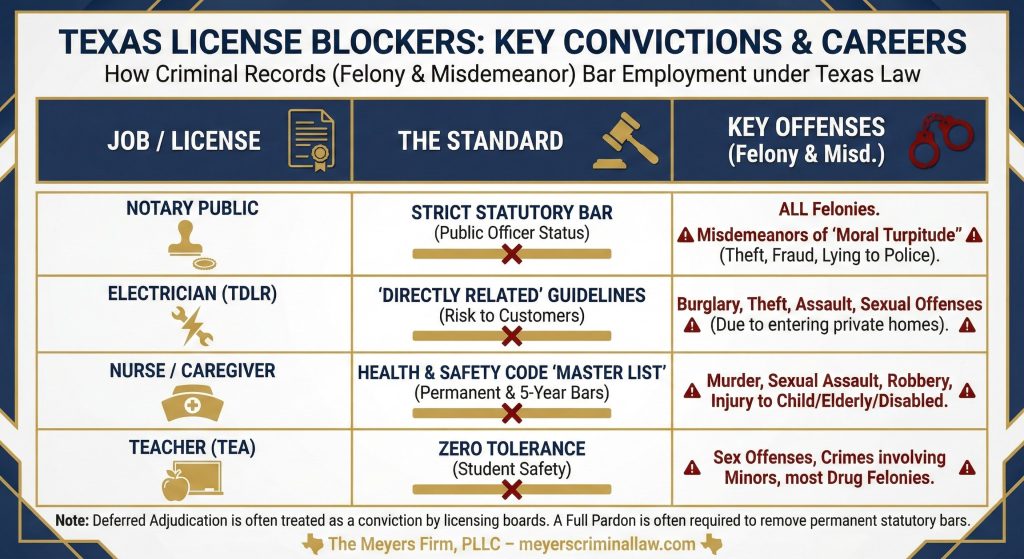
1. Texas Notary Public
The Secretary of State acts strictly because a Notary is a “public officer.” https://statutes.capitol.texas.gov/?tab=1&code=GV&chapter=GV.406&artSec=
The “Hard Bar” Convictions:
- Any Felony: You face automatic disqualification for any felony conviction unless you hold a Full Pardon.
- Crimes of Moral Turpitude (CMT): Additionally, this category acts as a catch-all for misdemeanors involving dishonesty or poor character.
Common Disqualifying Misdemeanors:
- Theft (Class B or A) and Issuing a Bad Check.
- Fraud, Lying to a Police Officer, or False Statements.
- Misdemeanor Assault by a man against a woman.
- Indecent Exposure or Solicitation of Prostitution.
2. Electricians
The Texas Department of Licensing and Regulation uses “Criminal Conviction Guidelines” to assess risk because electricians enter private homes and businesses.https://www.tdlr.texas.gov/crimhistoryeval.htm
Common Disqualifying Convictions:
- Crimes Against Property: Specifically, Theft, Burglary, Robbery, Criminal Mischief (Vandalism), and Fraud/Embezzlement.
- Crimes Against Persons: Assault (especially Aggravated), Murder/Manslaughter, and Kidnapping.
- Sexual Offenses: Notably, the department reviews Sexual Assault and Indecency with a Child strictly because the trade involves entering homes where families live.
3. Healthcare & Caregivers (The “Master List”)
Crucially, the strictest regulations regarding Texas professions and criminal records appear in the Health & Safety Code. This applies to nurses, nurse aides, and anyone working in facilities with older people(65+) or people with disabilities. Often, these constitute permanent bars to employment.statutes.capitol.texas.gov/docs/HS/pdf/HS.250.pdf
Automatic Permanent Bars:
- Homicide: Murder, Capital Murder, Manslaughter.
- Sexual Offenses: Sexual Assault, Aggravated Sexual Assault, Indecency with a Child.
- Robbery: Aggravated Robbery.
- Injury to Vulnerable: Injury to a Child, 65+ Individual, or Disabled Individual.
5-Year Ban (Cannot work for 5 years after conviction):
- Assault (Class A Misdemeanor or Felony).
- Burglary.
- Theft (Felony only).
- Misapplication of Fiduciary Property (Class A or Felony).
4. Teachers
Schools maintain a zero-tolerance policy for crimes that endanger students.
Automatic Disqualification:
- Any Felony requiring Sex Offender Registration.
- Any Felony involving a victim under 18 (or a misdemeanor involving moral turpitude with a minor).
- Drug Felonies: In addition, these often result in a permanent bar, although some exceptions may exist after 5-10 years depending on the district.
- https://statutes.capitol.texas.gov/?tab=1&code=ED&chapter=ED.22&artSec=
Conclusion: Is There a Way Out?
If you see your past offense on these lists, do not panic. Instead, get legal counsel. The intersection of Texas professions and criminal records is complicated.
For example, standard record sealing (nondisclosure) will not work for many of the “permanent bars” listed above. This occurs because licensing boards maintain the right to see sealed records./practice-areas/expunctions-non-disclosures/
In many cases, only a Full Pardon from the Governor can remove a statutory bar and save your career.
At The Meyers Firm, Paul has successfully obtained a governor’s pardon. If you face a licensing board investigation or need to know if your record can be cleared, contact The Meyers Firm, PLLC today.

Get in Touch
Free Consultation (936) 766-5171