- Free Consultation: (936) 766-5171 Tap Here To Call Us




Texas Electrician or HVAC professional arrested?


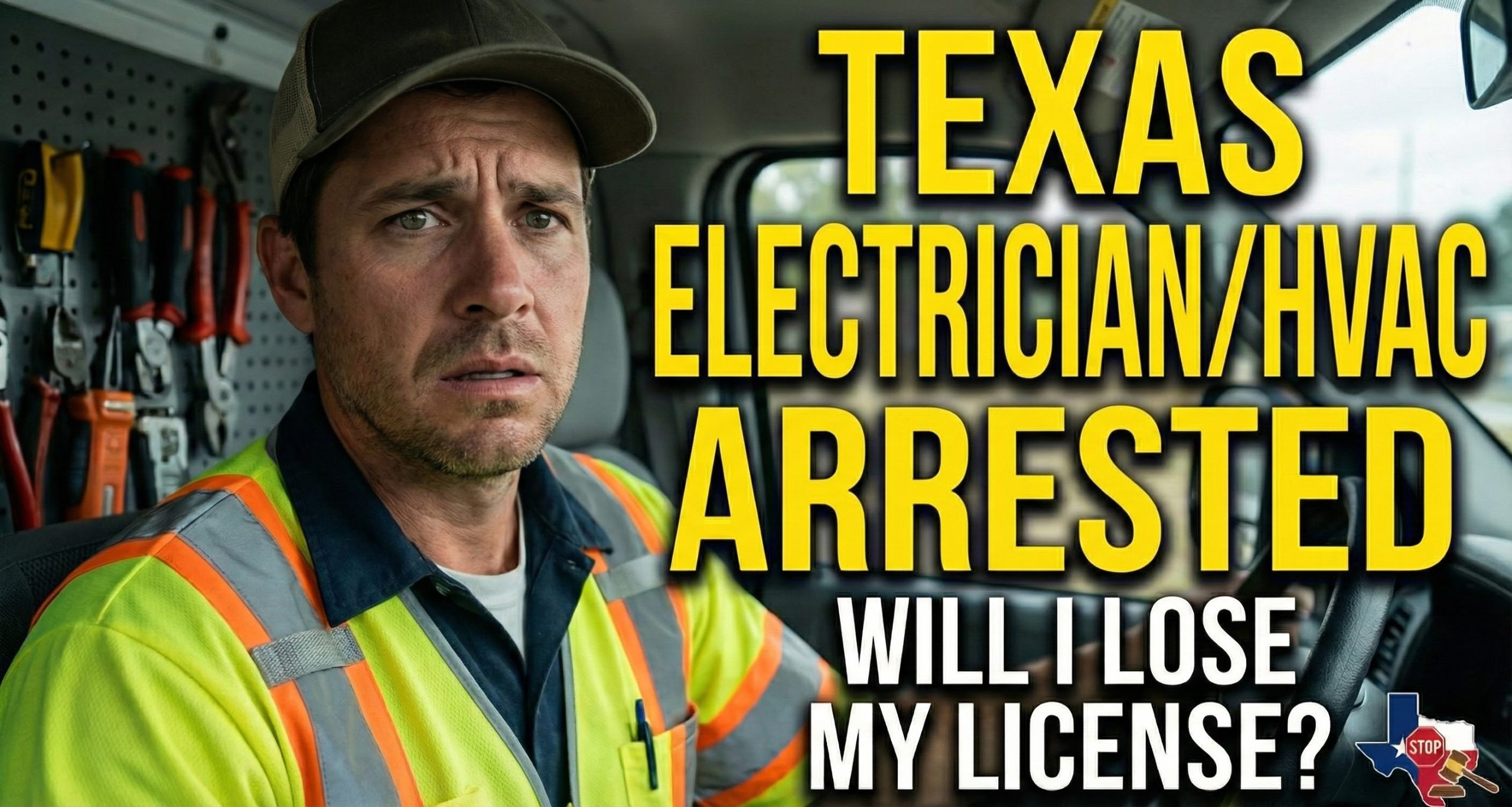
You invested years of your life to master a trade. Long days in hot attics or cramped crawlspaces learning to wire complex circuits and repair sophisticated climate control systems. You are a hard-working Texas electrician or HVAC professional and you’ve been arrested. What now?
In Texas, the Department of Licensing and Regulation (TDLR) maintains strict oversight over skilled trades. This state agency regulates electricians and HVAC technicians with the same intensity they apply to doctors, lawyers, and other licensed professionals./blog/nurse-arrested-in-texas/
Many tradespeople hold a dangerous misconception about their industry. They assume that because their work is “hands-on” or manual, a criminal history matters less. This assumption is inaccurate. If police arrest you, you must understand exactly how the state evaluates a Texas electrician or HVAC professional after an arrest. The TDLR does not overlook your record simply because you work in breaker boxes rather than a corporate boardroom. There are specific guidelines that determine your eligibility to work.
How the State Reviews a Texas Electrician or HVAC Professional Arrested
The TDLR does not view criminal records in a vacuum. The agency uses a specific “Criminal Conviction Guideline” to decide if your specific crime “directly relates” to your job duties. This standard often confuses license holders and applicants. You might rightfully wonder what a past assault charge or a theft conviction has to do with your ability to install a ceiling fan or fix a compressor. https://www.tdlr.texas.gov/crimconvict.htm
The answer lies in the concept of “opportunity.” The TDLR looks far beyond the mere name of the crime on your record. They analyze the opportunity the crime provides you to repeat the offense. They assess whether your specific job duties create a scenario where you could easily commit the same crime again. This method connects your past actions directly to your future employment eligibility. The state aims to remove risk from the marketplace, and they view your past behavior as a primary indicator of how you will act in the future.
The Unique Risks for Electricians and HVAC Techs
Your trade creates a specific environment that the state scrutinizes heavily. Unlike a factory worker or a landscaper, electricians and HVAC technicians require intimate access to private property. Your job requires you to enter people’s homes and businesses on a daily basis.
Often, you work in these private spaces when the property owner is not watching. You might be alone in a master bedroom fixing an outlet or in a commercial office after hours repairing a server room AC unit. This unique access creates a high level of necessary trust. Consequently, the board scrutinizes theft, burglary, and assault charges heavily for these specific trades.
If a homeowner grants you access to their private sanctuary, the state must ensure you pose no threat to their property or safety. A history of theft directly conflicts with the trust required to work unsupervised in a stranger’s home. The TDLR views this “opportunity” as a direct link between your criminal history and your professional license. They want to ensure you will not use your skills or your access to victimize a consumer.https://www.tdlr.texas.gov/crimconvict.htm
Danger Zones for a Texas Electrician or HVAC Arrest
Regardless of your specific skill level or years of experience, the TDLR focuses on three categories of conviction when reviewing your file. Understanding these “danger zones” helps you navigate the system effectively.
1. Direct Relation
This category asks a simple but critical question: Does the crime fit the job? As noted, the state analyzes the relationship between the offense and your duties. For an electrician or HVAC tech, crimes involving property damage or unauthorized entry often fall into this category because they mirror a violation of the job’s core responsibilities. If you have a record of breaking into buildings, the state will struggle to grant you a license that gives you keys and alarm codes to buildings. https://statutes.capitol.texas.gov/Docs/OC/htm/OC.53.htm
2. Moral Turpitude
This category covers crimes involving fraud, forgery, or swindling. The state views these as violations of community honesty standards. Even if the crime didn’t happen on a job site, a conviction for fraud suggests a lack of moral character. The state hesitates to grant licensure to individuals who demonstrate a willingness to deceive others for personal gain. They worry you might overcharge a customer, falsify an invoice for parts you never bought, or recommend unnecessary repairs to clients.
3. Felony Incarceration
The Texas Occupations Code draws a hard line here. The state must revoke your license if you currently sit in prison for a felony. While other guidelines allow for interpretation, context, and arguments for rehabilitation, current felony incarceration triggers mandatory revocation.https://statutes.capitol.texas.gov/docs/oc/htm/oc.53.htm
Conclusion: CALL PAUL NOW!
Your job is all about precision and fixing complex problems. When it comes to your criminal defense, you deserve that same level of expertise. Don’t let a legal issue short-circuit the career you’ve built. If you are a skilled tradesman arrested in Texas, you need a lawyer who understands the stakes in the courtroom and with the licensing board.
Contact Paul Meyers Today. Phone: (936) 766-5171 Website: meyerscriminallaw.com Location: Conroe, Texas https://www.meyerscriminallaw.com/contact-us/

Get in Touch
Free Consultation (936) 766-5171