- Free Consultation: (936) 766-5171 Tap Here To Call Us




Ring Doorbell Evidence in Texas:


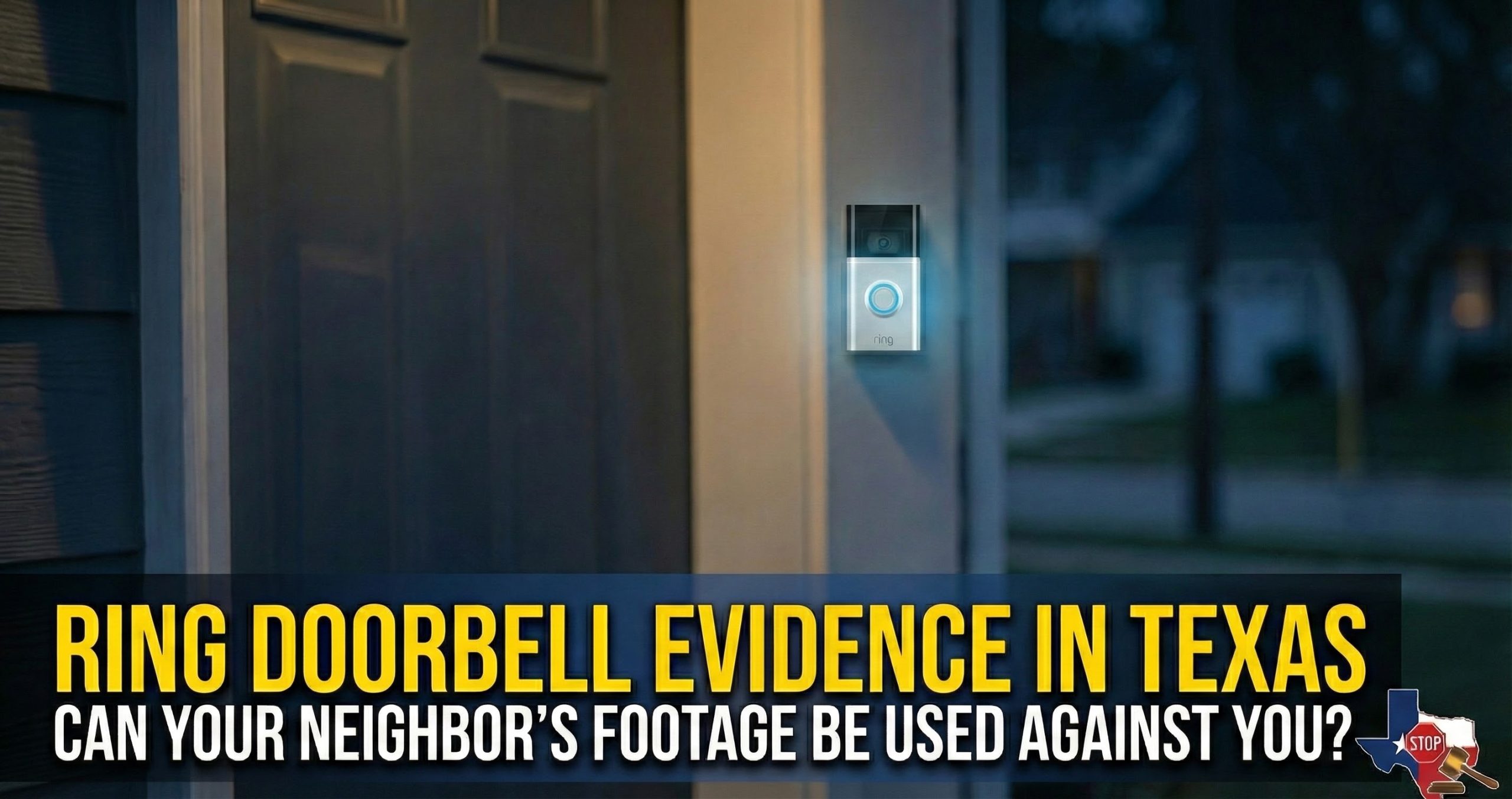
Can Your Neighbor’s Ring Doorbell Be Used Against You as Evidence in Texas?
Drive through any neighborhood from Conroe to The Woodlands, and you will see the glowing blue circles of Ring doorbells (or Nest, Arlo, and others) on almost every porch. These devices don’t just record package deliveries; they record arguments, traffic stops, DWI arrests in driveways, not to mention the comings and goings across the street.
If you are facing criminal charges in Montgomery County, there is a high probability that video evidence exists. But the big question we get at Meyers Criminal Law is: Can the police obtain my neighbor’s video and use it against me?
The short answer is usually yes—but Texas law provides unique defenses that can keep this evidence out of court. Here is what you need to know about digital surveillance and your rights.
The “Reasonable Expectation of Privacy” & Ring Doorbell Evidence in Texas
To understand why a neighbor’s camera is legal, you have to understand the Fourth Amendment. Generally, the Constitution protects you from unreasonable searches in places where you have a “reasonable expectation of privacy.” https://supreme.justia.com/cases/federal/us/389/347/
You have that expectation inside of your house. You typically do not have it on a front porch or sidewalk.
Under Texas case law, the “curtilage” (the immediate area around your home) is protected, but only if you take steps to conceal it from the public. If you are standing in your front yard or on the street, you are in “public view.” If your neighbor can see you with their naked eye, their camera is allowed to see you, too. https://case-law.vlex.com/vid/bower-v-state-69333-885741652
This means that if a Ring camera captures video of a front lawn, that footage is likely admissible if obtained. The police do not need a warrant to look at what was already visible to the public or in the public space.
How Police Get the Ruing Door Bell Evidence in Texas: The Private Search Doctrine
Many people assume the police in Texas need a warrant to seize video evidence, such as ring doorbell footage, from a neighbor. That is only true if the neighbor refuses to help
In most cases, police officers in Montgomery County simply knock on the neighbor’s door and ask, “Hey, did your camera pick up anything last night?” If the neighbor voluntarily shares the video, no warrant is required.
This falls under the Private Search Doctrine (often linked to the federal Burdeau v. McDowell standard). The Fourth Amendment only limits the government, not private citizens. If your neighbor—a private citizen—decides to record you and hand it over, they haven’t violated your Constitutional rights because they aren’t the police. https://supreme.justia.com/cases/federal/us/256/465/
The Exception: When the Neighbor Breaks the Law (T.C.C.P. 38.23)
Here is where Texas law has an advantage over federal law.
In Federal court, if a private person steals evidence and gives it to the police, it might still be used. In Texas, that evidence is illegal.
Under Texas Code of Criminal Procedure Article 38.23, no evidence may be admitted against you if it was obtained in violation of any law of the State of Texas—even if a private citizen (your neighbor) was the one who broke the law. https://codes.findlaw.com/tx/code-of-criminal-procedure/crim-ptx-crim-pro-art-38-23/
This is critical for two reasons:
- Trespassing: If your neighbor had to trespass on your property to install the camera or get the angle, the video might be thrown out.
- Illegal Audio Recording: This is the most common violation with Ring cameras.
The Problem with Audio: Texas Penal Code § 16.02
Texas is a “one-party consent” state under Texas Penal Code § 16.02. This means you can legally record a conversation only if you are a part of that conversation. https://law.justia.com/codes/texas/penal-code/title-4/chapter-16/
If your neighbor’s Ring camera is sensitive enough to record a quiet conversation you are having with your spouse across the street, and the neighbor is not a participant in that chat, they may have committed a felony (Unlawful Interception of Oral Communication).
Because the neighbor broke the law to get that audio, Article 38.23 says we can move to suppress it. We can argue to the judge that the jury should never hear those words.
Challenging the Ring Doorbell Evidence in Texas: It’s Not “Case Closed”
Just because the prosecutor has the video doesn’t mean it gets admitted. Texas Rule of Evidence 901 requires digital evidence to be authenticated before admitted, resulting in potential challenges to the reliability of digital evidence. https://texasevidence.com/article-ix/rule-901/
The State must prove the video is authentic. What does that mean?
- Is it the original? In Fowler v. State, Texas courts wrestled with the issue of police using body cams to record a screen playing surveillance footage. This “video of a video” degrades quality and can be challenged.https://caselaw.findlaw.com/court/tx-court-of-appeals/1937570.html
- Is the timestamp accurate? Ring cameras rely on Wi-Fi. If the connection lags, the timestamp can be off, ruining the State’s timeline.
- Is it complete? Most doorbell cameras are motion-activated. They often cut off the first few seconds of an interaction. This creates a “de-contextualized” clip. A lack of completeness could affect the admissibility of digital evidence.
What Should You Do?
The existence and prevalence of Ring doorbells and security cameras in neighborhoods across Montgomery County, from The Woodlands to Conroe, like cellphone videos, fundamentally changed the landscape of criminal evidence in Texas./blog/texas-police-phone-search-warrant-laws/
While this footage can be a powerful tool for the prosecution, it is not unassailable. Texas law, through statutes like the Code of Criminal Procedure Art. 38.23 and evidentiary standards like Rule 901, provides mechanisms to challenge the admissibility and reliability of this digital evidence. Whether it’s questioning the legality of how the footage was obtained or exposing gaps in its authenticity, you have options.
At the Meyers Firm, PLLC, Paul Meyers leverages his experience in Montgomery County courts & legal knowledge to dissect the digital trail and build a vigorous defense for his clients. If you believe surveillance footage is being used against you, don’t face it alone. Contact Paul Meyers today at (936) 766-5171 or visit meyerscriminallaw.com to secure the legal representation you deserve. https://www.meyerscriminallaw.com/contact-us/

Get in Touch
Free Consultation (936) 766-5171